New: FreshClock automated perishable markdowns, now shipping on every OmniTag color label. See how it works
Home / Solutions

Every place a price is still printed by hand.

The hardware is the same in all of them. What changes is the rule you write: an ad break in grocery, a freshness clock in produce, a pick sequence in the warehouse, a market adjustment on the lot.

Grocery & supermarket

Update your entire store in seconds.

A 40,000-SKU store changes thousands of prices a week between the ad, vendor cost moves, and competitive matches. Every one of those is currently a person, a printer and a walk.

  • Weekly ad breaks scheduled to fire at 6:00am, chainwide, before the doors open.
  • Loyalty and member pricing shown on the same tag as the shelf price.
  • Competitive price matches pushed the hour you decide them, not the following Tuesday.
  • Shelf-to-register parity by construction, because both read the same record.
  • Per-label confirmation so you know the ad landed in all 214 stores.
Scope a grocery rollout
6:00am
Scheduled ad break, executed with no staff on the floor
8s
To push a chainwide change out to every affected label
0
Tags printed, sorted, walked or swapped
100%
Of labels report back whether they took the change
FreshClock · the fresh-aisle playbook

Instant dynamic markdowns, before freshness fades.

Perishable shrink is not really a spoilage problem. It is a timing problem. The discount that would have sold the item on Thursday morning gets applied Friday night, when nobody is going to buy it at any price.
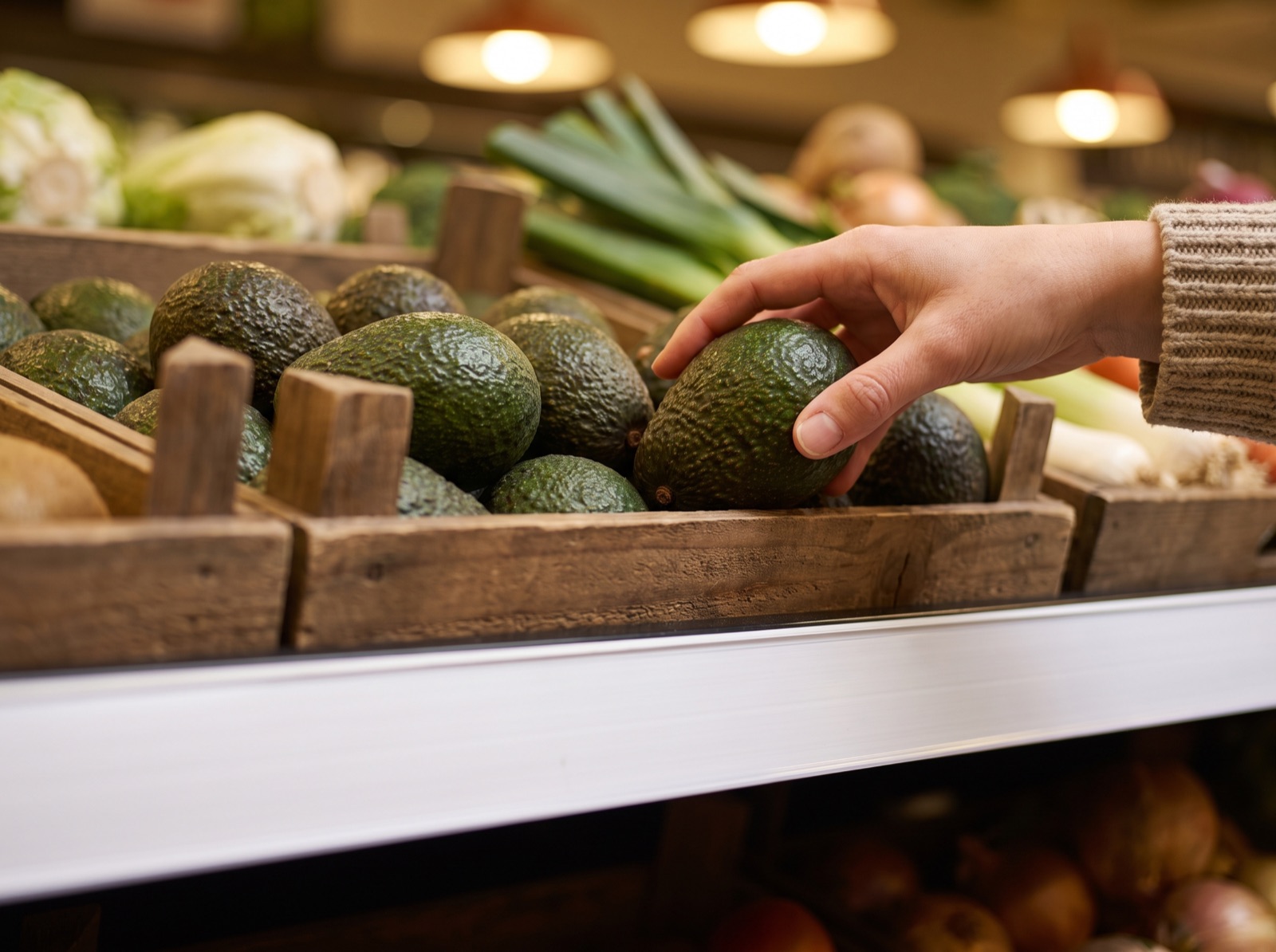
A shopper picking a Hass avocado from a wooden crate, with the shelf-edge price rail below.
Day four. The avocado is still perfect, and it is still full price. FreshClock steps it down to 20% off at 6am, before anybody has to notice.
1

Receive the case, start the clock

The received date comes in from your DSD or warehouse receipt. FreshClock attaches it to every label bound to that item, so the countdown is per-lot rather than per-SKU.

Day 0
2

Step the price down on schedule

You write the rule once for the category. Day 4 goes to 20% off, day 5 to 40%, day 6 pulls the item and flags it for the department manager. The tag changes itself at each step.

Day 4 → Day 6
3

Say why, in red

The label flips to the red channel and prints the reason: "Ripe today." "Best by tonight." A discount that explains itself converts better than a bare number, and it protects the everyday price from looking inflated.

At each step
4

Register agrees, instantly

The markdown reaches the POS at the same moment it reaches the shelf. No override at the lane, no sticker, no argument at the register.

Same second
5

Read the result per SKU

Every markdown is logged with the step, the timestamp and what sold after it. You find out which rules recovered margin and which ones were discounting items that would have sold anyway.

Weekly report

Why early and shallow beats late and deep

A 20% markdown on day four that sells the item recovers 80% of the retail. A 50% markdown at 8pm on day six, if it sells at all, recovers 50%. If it does not sell, you recover nothing and pay to throw it away. FreshClock exists to move that decision earlier, every time, without relying on anyone remembering to walk the case.
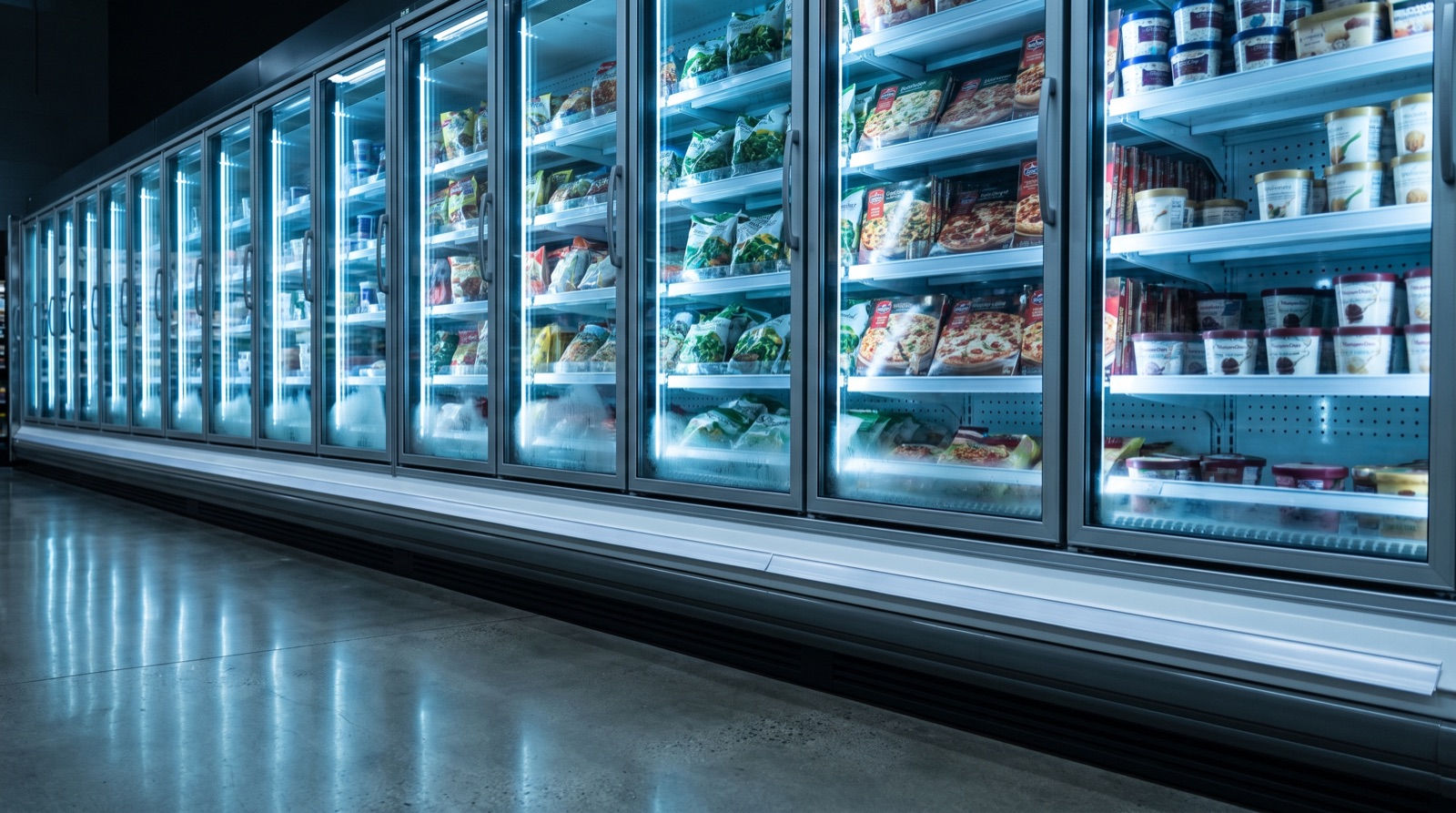
A supermarket frozen food aisle with glass-door freezer cases and shelf-edge price rails.
The worst aisle to price by hand, and the one nobody wants to walk. F-series labels update through a closed door at −25 °C.
Cold chain & freezer

From the produce bin to the freezer aisle.

Freezer doors are where paper tagging is worst: cold hands, condensation, adhesive that lets go, and a case you have to open to fix a price. The F-series was specified for that aisle specifically.

  • Rated −25 °C to +50 °C, so the display refreshes cleanly while the case is cold.
  • IP65 sealed housing that survives door-cycle condensation without fogging.
  • Low-temperature cell rated for four years inside the case.
  • Updates land through a closed door. Nobody opens the case to change a price.
  • Same console, same templates and same rules as the ambient aisles.
See the F-series
−25

Cold-rated film

E-paper film and driver specified for sub-zero refresh, not just sub-zero storage.

IP65

Sealed

Dust-tight and protected against water jets. Door cycles do not get inside it.

4yr

Cold cell

Low-temperature chemistry, because a standard coin cell loses most of its capacity in a freezer.

↔

Through-glass

Update reaches the label with the case closed and the door seal intact.

◉

Light the bin

Tri-color LED on the location the picker needs next. No paper pick list, no hunting.

✓

Confirm at the shelf

Physical button on the label takes the confirmation where the pick actually happens.

#

Quantity on the face

The e-paper shows the quantity for this order, then clears when the pick is confirmed.

⇄

WMS-driven

Your warehouse system stays in charge. OmniTag is the display and input layer at the rack.

Warehouse & 3PL

Pick-to-light without rewiring the racking.

Traditional pick-to-light means a powered bus down every rack. OT-PICK labels are battery-powered and wireless, so a location can be lit, labelled and confirmed anywhere the access points reach, including a slot you re-racked yesterday.

  • Re-slot a location without an electrician.
  • Bin identity, SKU and quantity on the same face as the light.
  • Confirmation captured at the shelf instead of on a handheld the picker has to put down.
  • Cycle-count mode lights a sample of locations on a schedule you set.
See OT-PICK
Also deployed in

The same system, a different rule.

PHARMACY

Regulated pricing, shelf-level

Price accuracy under audit, planogram compliance you can verify from the console, and stock signalling on the shelf edge for slow-moving OTC lines.

HARDWARE & TRADE

Long tail without a print room

Bin-level accuracy across tens of thousands of low-velocity SKUs, plus contractor tier pricing shown alongside retail on the same label.

AUTO DEALERSHIP

Lot pricing that moves with the market

Window pricing and feature callouts on 7.5" and 11.6" labels, updated from your inventory system when the market adjusts, not when someone reprints the sheet.

GARDEN & NURSERY

Live goods on a growing clock

Outdoor-rated labels with FreshClock rules tuned to plant condition rather than a sell-by date, so the markdown lands before the plant does.

CONVENIENCE & FUEL

High-frequency price movement

Small footprint, high change rate, and thin staffing. The aisle labor a c-store saves is a larger share of its total hours than in any other format.

WORKPLACE

Rooms, desks and assets

Meeting-room status, desk hoteling and asset tagging on the same access-point network already installed for the retail floor.

Which aisle costs you the most labor?

Start there. We will scope a single-department pilot with a fixed price and a defined measurement window, then expand off the numbers you actually collected.